
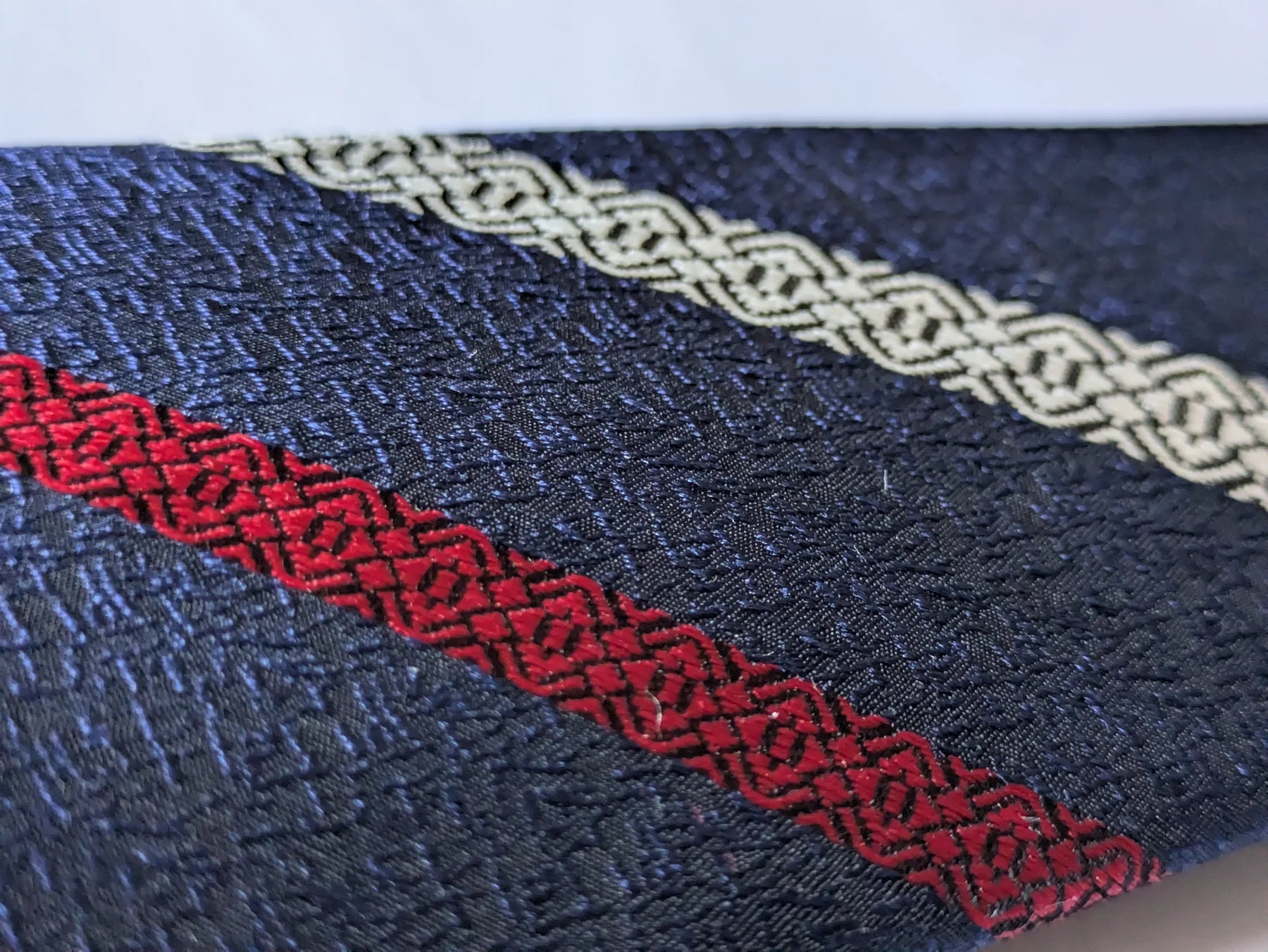
What is Hakata-ori?
WOVEN IN HAKATA
SINCE 1241
A silk textile shaped by centuries of craftsmanship in Fukuoka, Japan.
1241
THE BEGINNING
Hakata, Japan
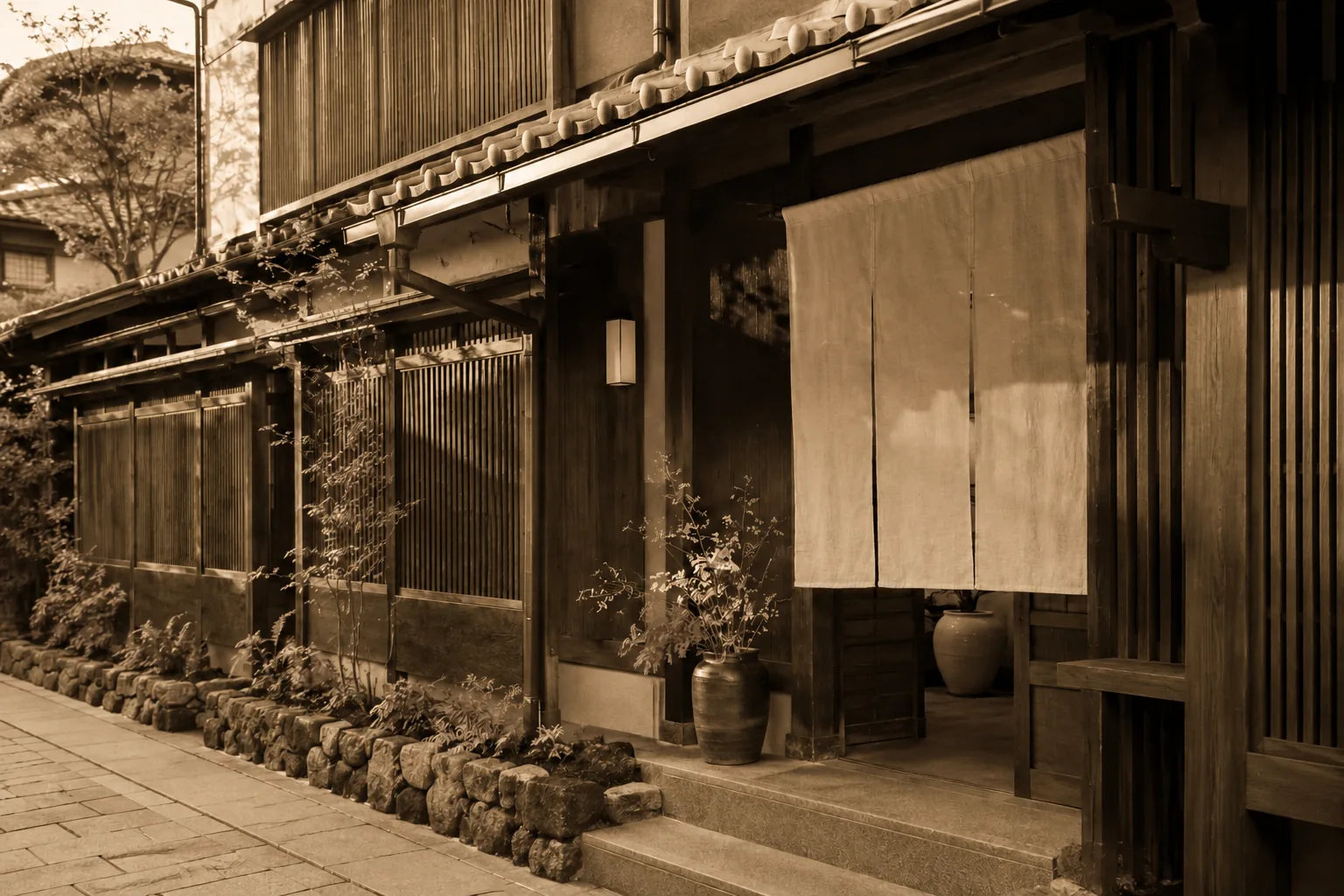
Hakata-ori (博多織) is a traditional silk textile from Fukuoka, Japan. Its origin story is commonly traced to Hakata in 1241, when Hakata merchant Mitsuda Yazaemon returned from Song China after learning weaving techniques.
Later generations refined the technique, and the textile came to be known by the Hakata name. During the Edo period, Kuroda Nagamasa selected Hakata-ori as a tribute offering to the Tokugawa shogunate.
THE ART OF WEAVING
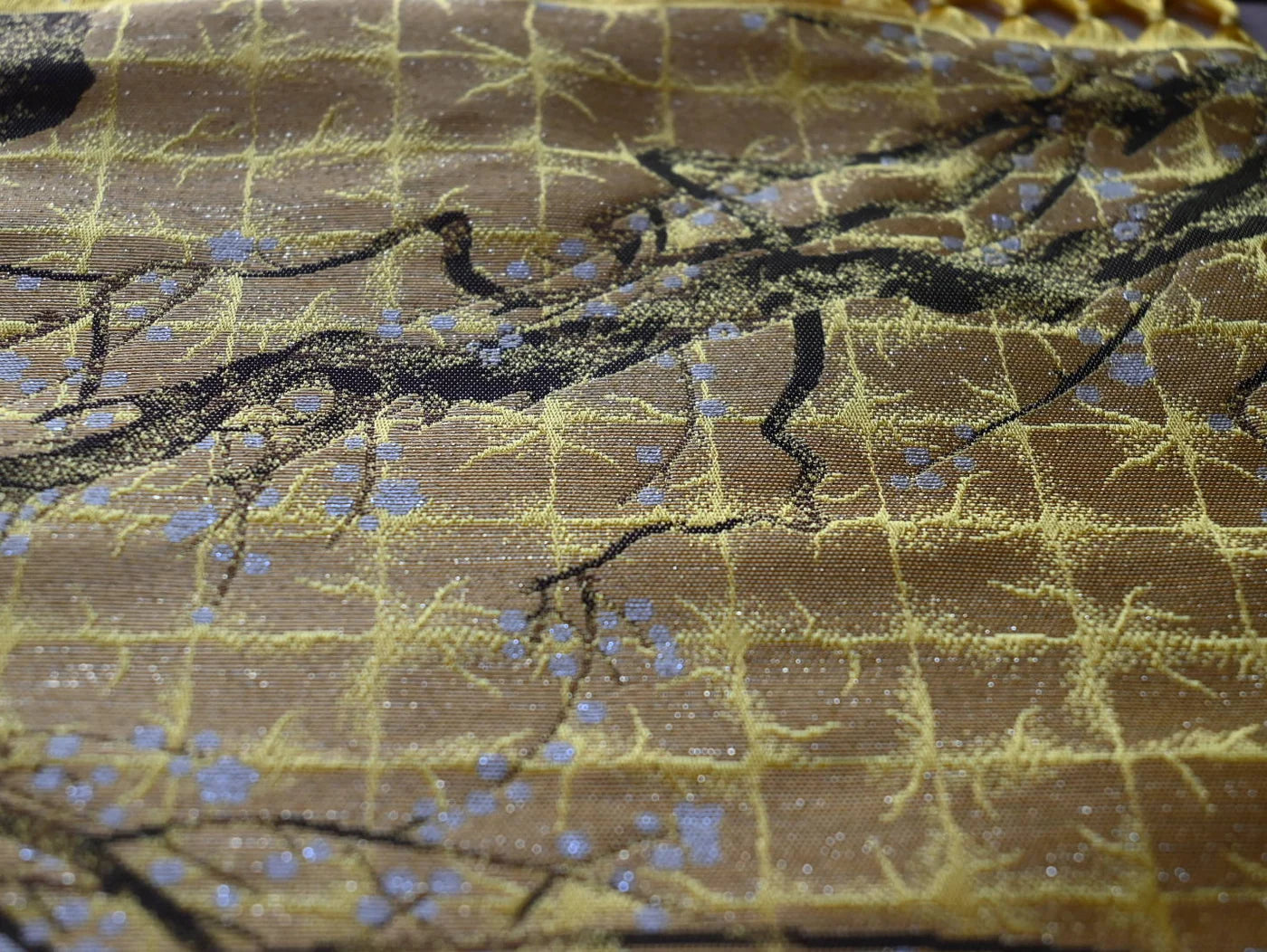
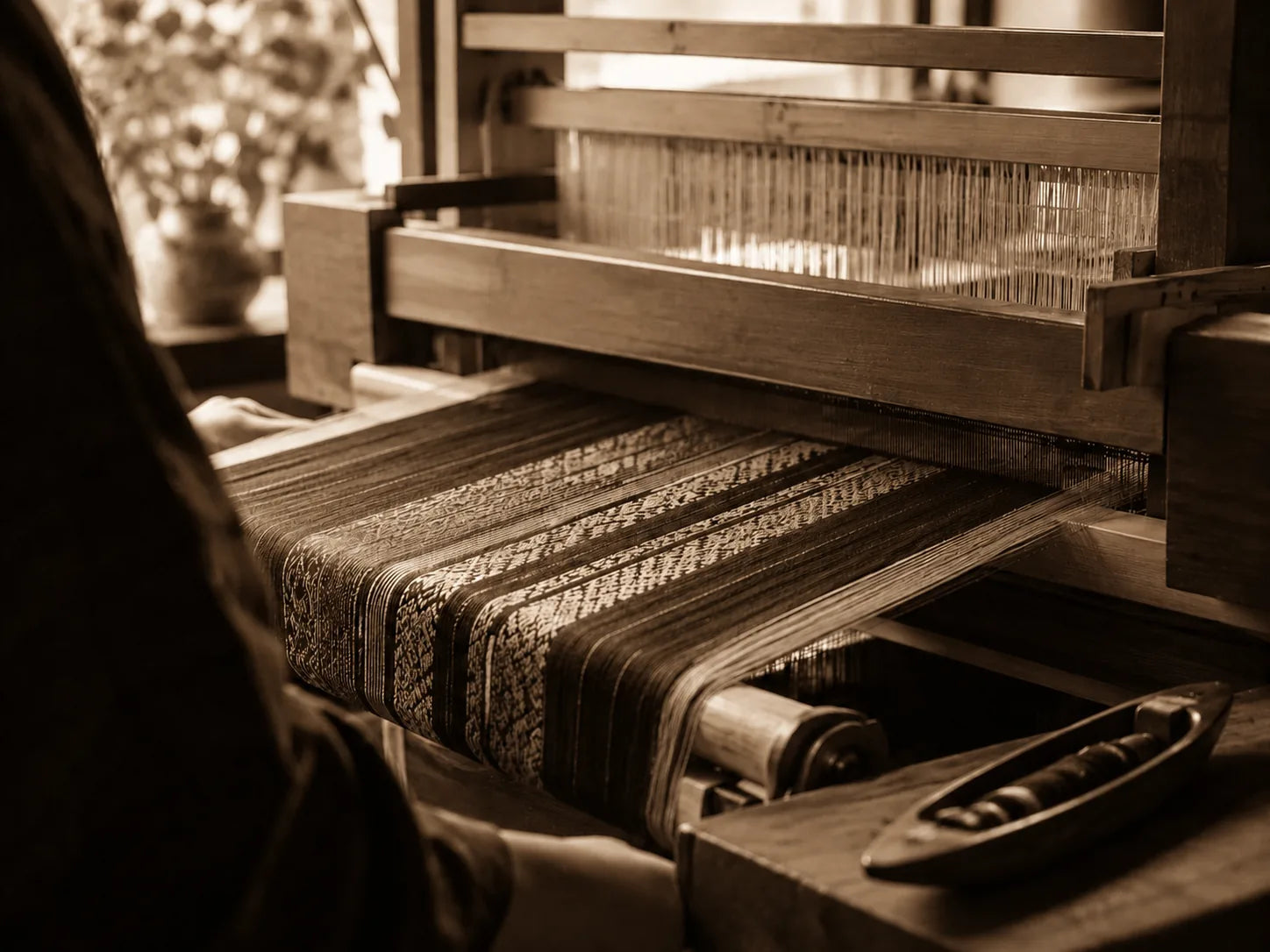
Trusted maker copy describes some obi preparations with about 7,000 to 15,000 warp threads. The point is the preparation and density, not a universal count for every product.
The easiest difference to see is the surface. In Hakata-ori, many warp threads and tightly beaten weft create a firm, crisp textile with visible structure.
DENSE WARP
Dense warp threads build the visible surface. That density helps detailed motifs stay clear in obi, ties, pouches, and other woven pieces.
FIRM WEFT
The weft is beaten firmly into the warp, giving the cloth tightness, body, and spring while keeping it supple enough for use.
CRISP STRUCTURE
The pattern is made through the threads, so light moves across the surface differently from a flat surface design.
DURABILITY
For obi, this structure matters because it helps the sash tighten securely and hold its shape. That practical strength is part of the textile's reputation.
KENJO
THE PATTERN OF TRIBUTE
Kenjo (献上) means tribute or formal presentation. In Hakata-ori, the Kenjo pattern is often explained through Dokko, Hanazara, Oyako-jima, and Koko-jima motifs.

DOKKO
A Buddhist ritual implement, associated with breaking worldly desires and warding off harm.

HANAZARA
A vessel used for scattering flowers in Buddhist offerings.

OYAKO-JIMA
Parent-and-child stripes, associated with wishes for family safety.

KOKO-JIMA
Continuation stripes, associated with continuity across generations.
BUILT
TO HOLD.
Hakata-ori has been valued for demanding belt forms because the dense structure can tighten securely and keep its shape. That strength is part of why it appears in obi, ceremonial sumo kesho-mawashi, and silk shimekomi used by higher-ranked professional wrestlers.
A SHORT HISTORY
1241
THE BEGINNING
The origin story begins with weaving knowledge brought back to Hakata.
EDO
TRIBUTE
Kuroda Nagamasa selected Hakata-ori as an offering to the Tokugawa shogunate.
1976
TRADITIONAL CRAFT
Hakata-ori was designated a traditional Japanese craft.
TODAY
MODERN DESIGN
It continues beyond obi in ties, small goods, interiors, art, and gifts from Fukuoka.
FROM OBI
TO MODERN LIFE
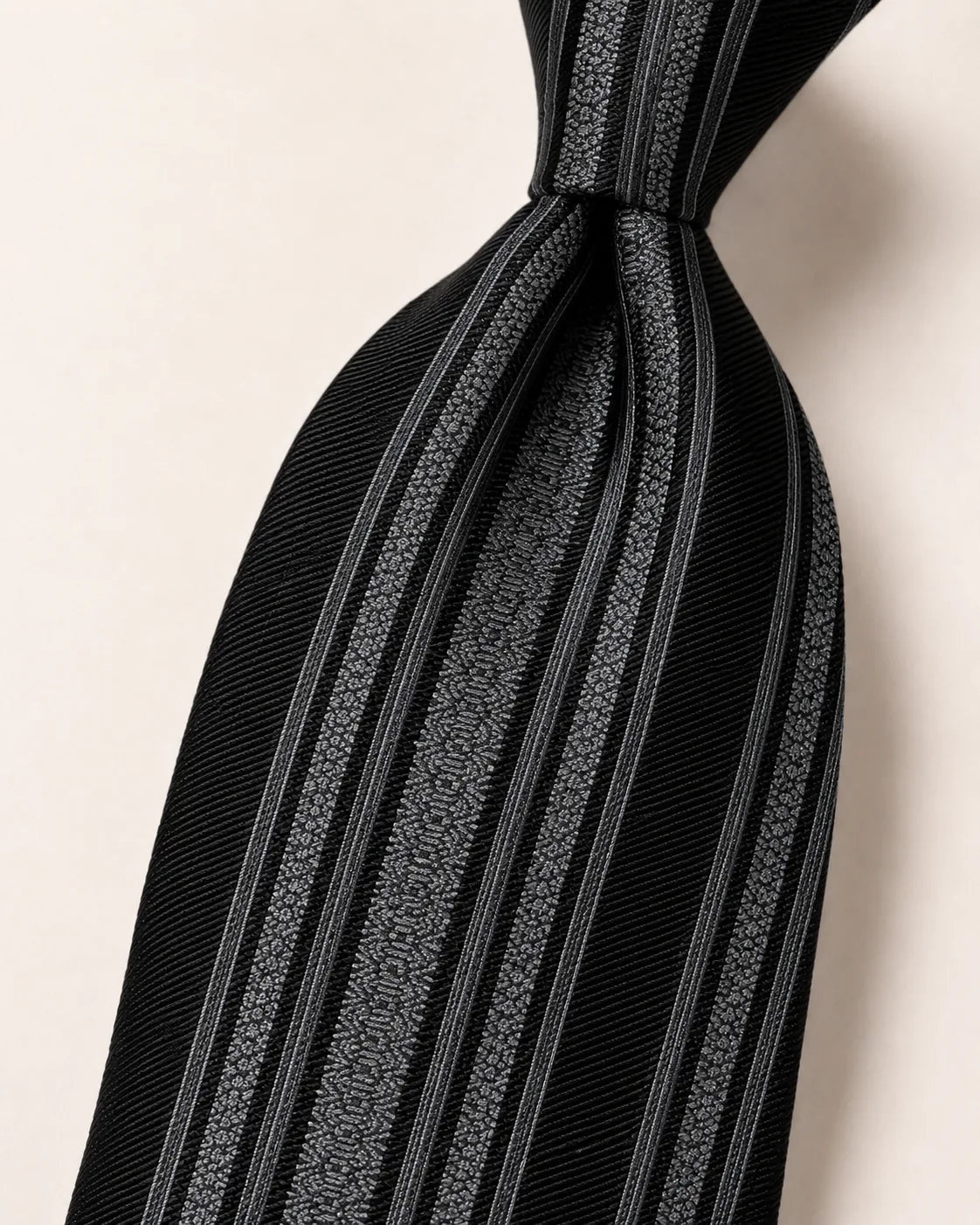
Today, Hakata-ori appears in neckties, pouches, stoles, interiors, and gifts from Fukuoka. The formal history and practical strength make the textile easy to explain and use in contemporary life.
 NECKTIES
 STOLES
 ACCESSORIES
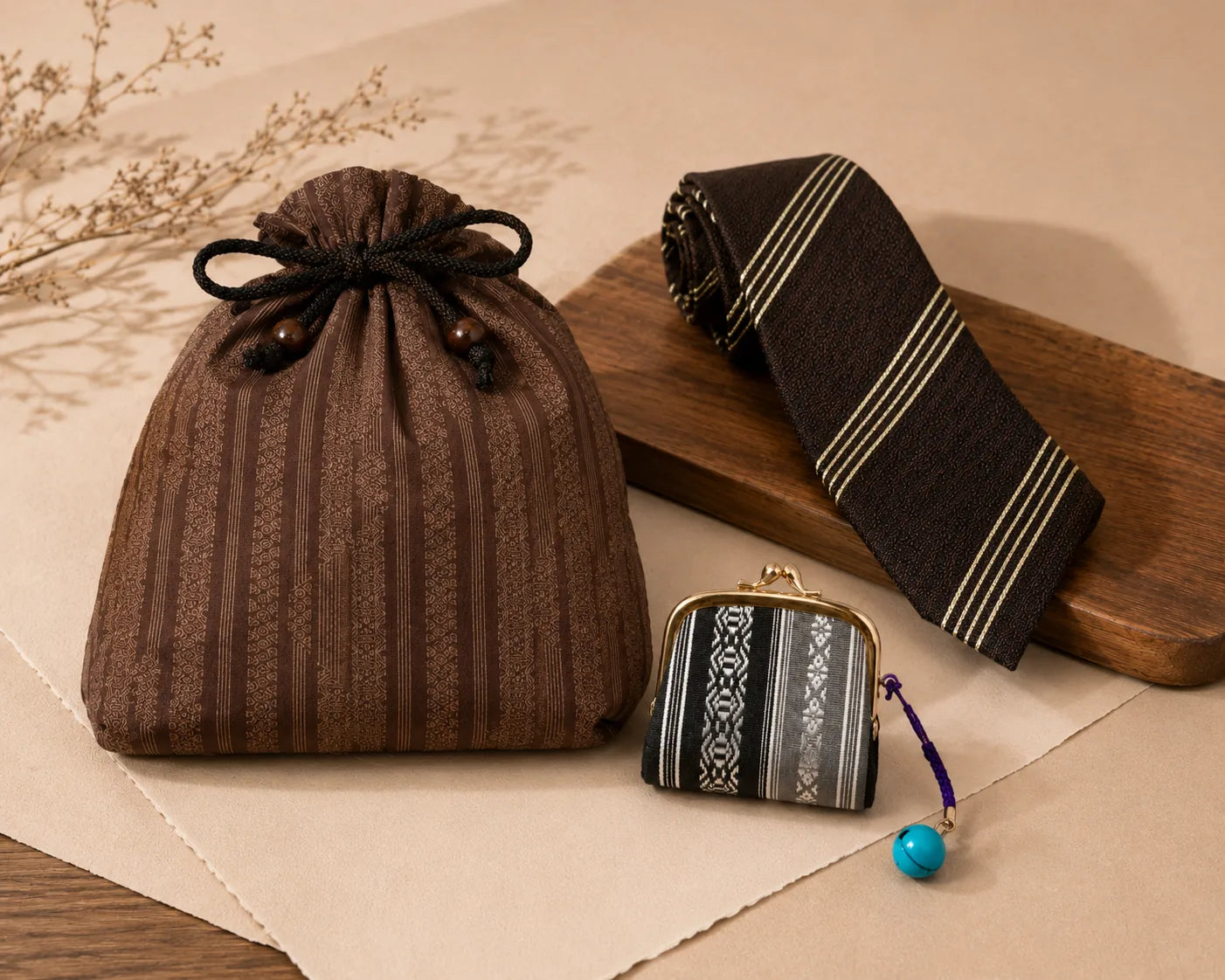 GIFTS
GIFTS
 INTERIORS
CRAFTED
IN FUKUOKA
Hakata-ori is not only a Japanese textile category. It is tied to Hakata and Fukuoka: the place where the name, the formal tribute history, and the modern product forms still meet.
For a gift, that gives the piece a clear origin. For a product, it gives the texture and pattern a context that can be explained simply.
COMMON QUESTIONS
What is Hakata-ori?
Hakata-ori is a traditional silk textile from Fukuoka, Japan, known for dense warp threads, firmly beaten weft, a crisp surface, and formal woven patterns such as Kenjo.
What makes Hakata-ori different?
The difference is structural. Many warp threads and tightly beaten weft create a firm, crisp surface, and the pattern is formed through the weave rather than placed only on top of the cloth.
What is the Kenjo pattern?
Kenjo (献上) means tribute or formal presentation. In Hakata-ori, the Kenjo pattern is often explained through Dokko, Hanazara, Oyako-jima, and Koko-jima motifs.
Is Hakata-ori always silk?
Traditional and many Hakata-ori pieces are silk, but the material should be checked on each product. Fukuoka Silk product pages list the confirmed material for the item being sold.
Why is Hakata-ori suitable for gifts?
The pattern is woven into the cloth, so even a tie, pouch, stole, panel, or small piece can carry a clear Fukuoka craft story. It gives the recipient something useful or displayable, with a background that is easy to explain.
Do you offer wall art, panels, or hanging-scroll pieces?
Some Hakata-ori textiles can be discussed as wall art, panels, or hanging-scroll style pieces. These are handled by inquiry because the textile, size, mounting method, and shipping need to be confirmed first. Please use the wholesale inquiry form and include the intended use, approximate size, destination country, and timeline.
Can I request a custom-made design with a logo or Fukuoka motif?
Custom-made Hakata-ori pieces may be possible, including logo-based designs or motifs that express Fukuoka. Feasibility depends on the design, quantity, schedule, and maker capacity, so please contact us before planning a date or budget. Include the logo or design direction, form, size, quantity, destination country, and deadline in the wholesale inquiry form.
Where should I start if I want to buy one?
If the use is clear, start from the relevant product collection. For wall pieces, panels, hanging-scroll style work, or custom-made pieces, use the wholesale inquiry form.
Reference: Hakata-ori Industrial Association overview, OGAWAYA sumo-related Hakata-ori notes, Nishimura Orimono notes recorded in the Fukuoka Silk knowledge base, and Fukuoka Silk product records. For motif details, see Kenjo Pattern Meaning.