
Gift guide
Choose a Japanese silk gift by the situation.
Start with the recipient, the setting, and whether the gift needs to be carried, worn, or used every day.
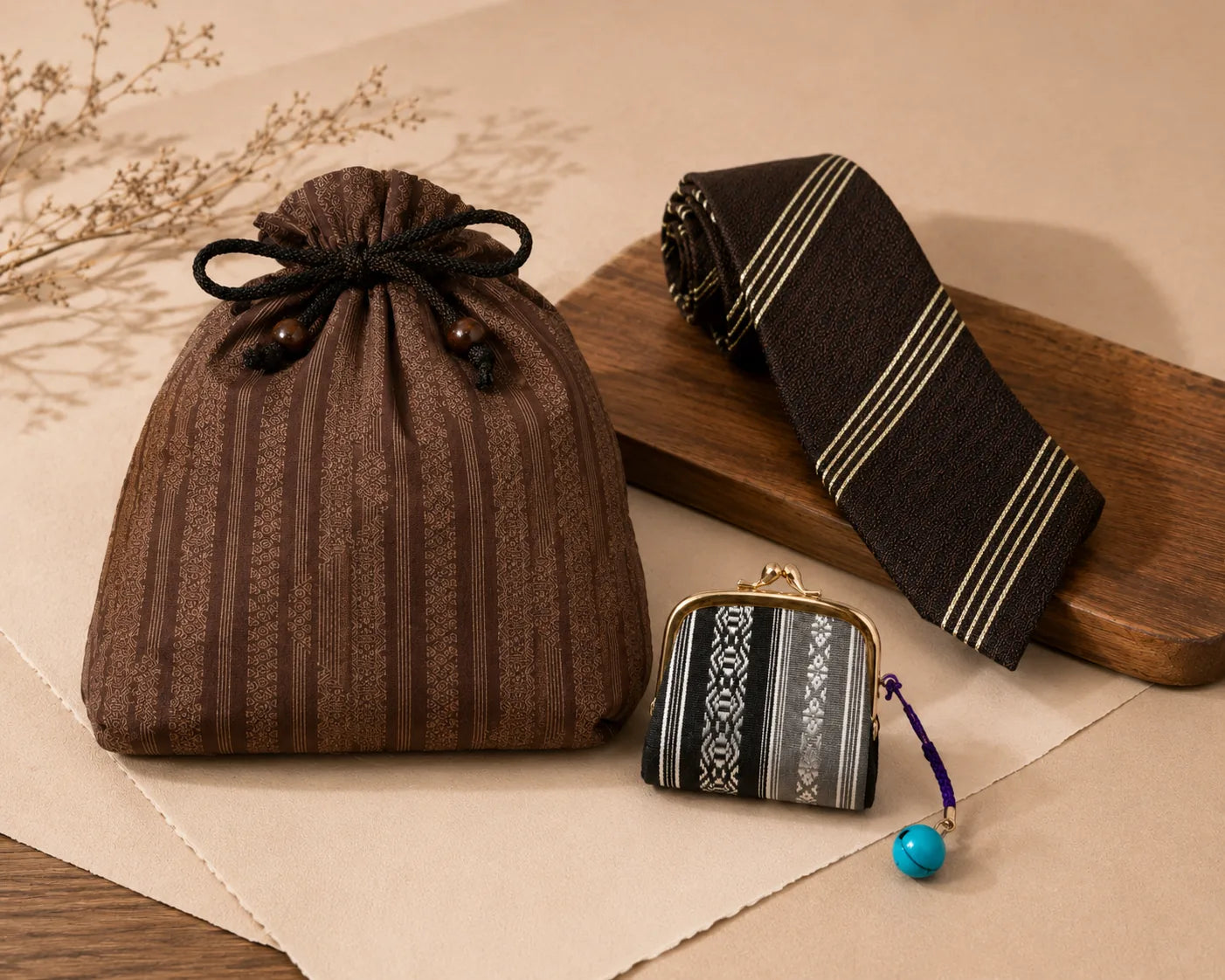

Start with the situation.
A gift for travel can be light. A gift for work can be formal. A gift for daily use should fit naturally into a bag or wardrobe.
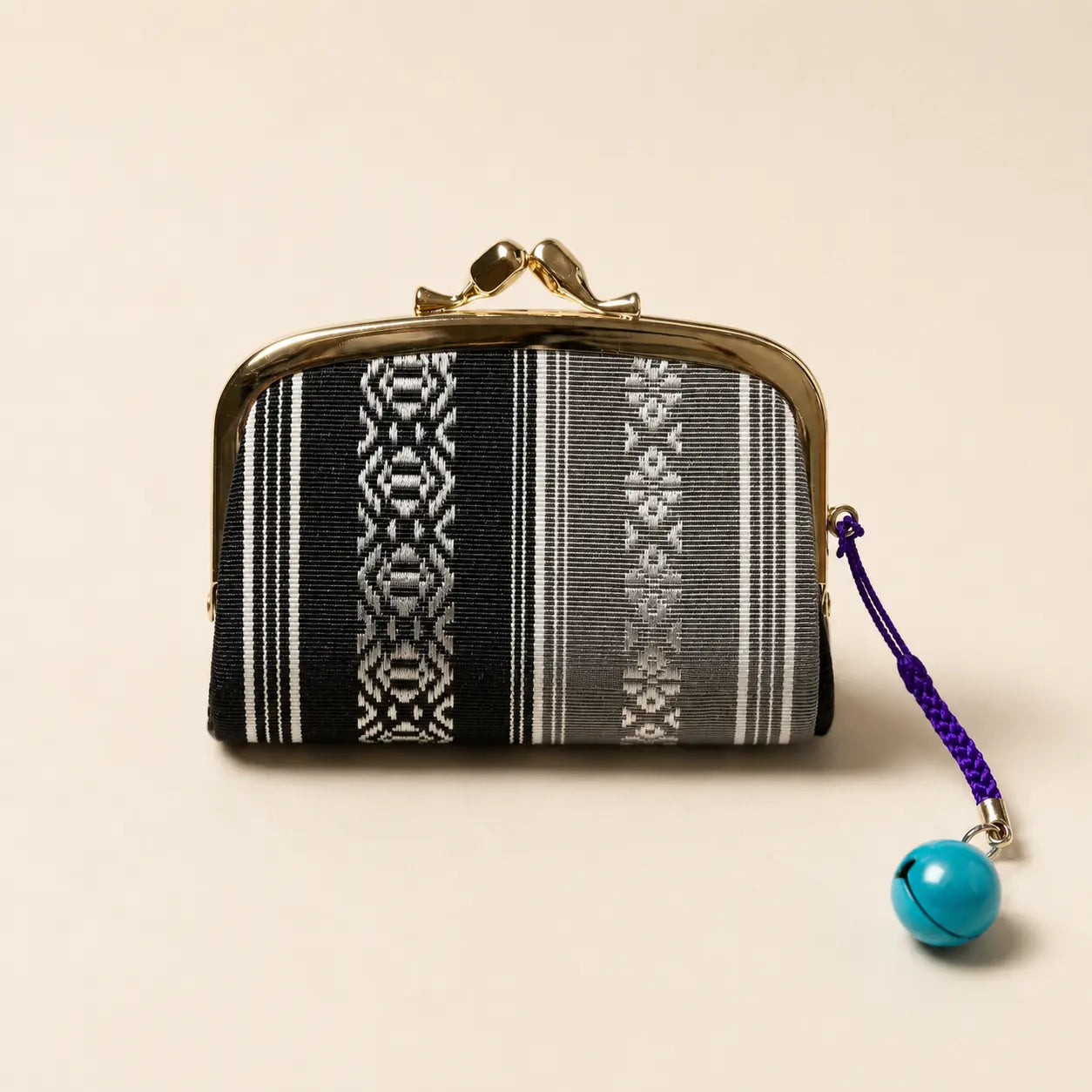
Small goods
Choose a pouch or clasp purse when the gift should be compact, useful, and easy to carry.
Check small gifts
Silk stoles
Choose a light stole when the gift should fold small and work over a shirt, dress, or travel outfit.
Compare stoles
Silk ties
Choose a tie when the gift is for work, ceremony, or dinner and should stay quiet.
Check silk tiesAfter the trip
A Fukuoka gift after the trip.
If you came home without the right gift from Fukuoka, choose by use first: a small good for a bag, a stole for travel and ceremony, or a silk tie for formal gifting. The Fukuoka story stays clear without depending on airport, station, or food-souvenir timing.
Why silk and weave help
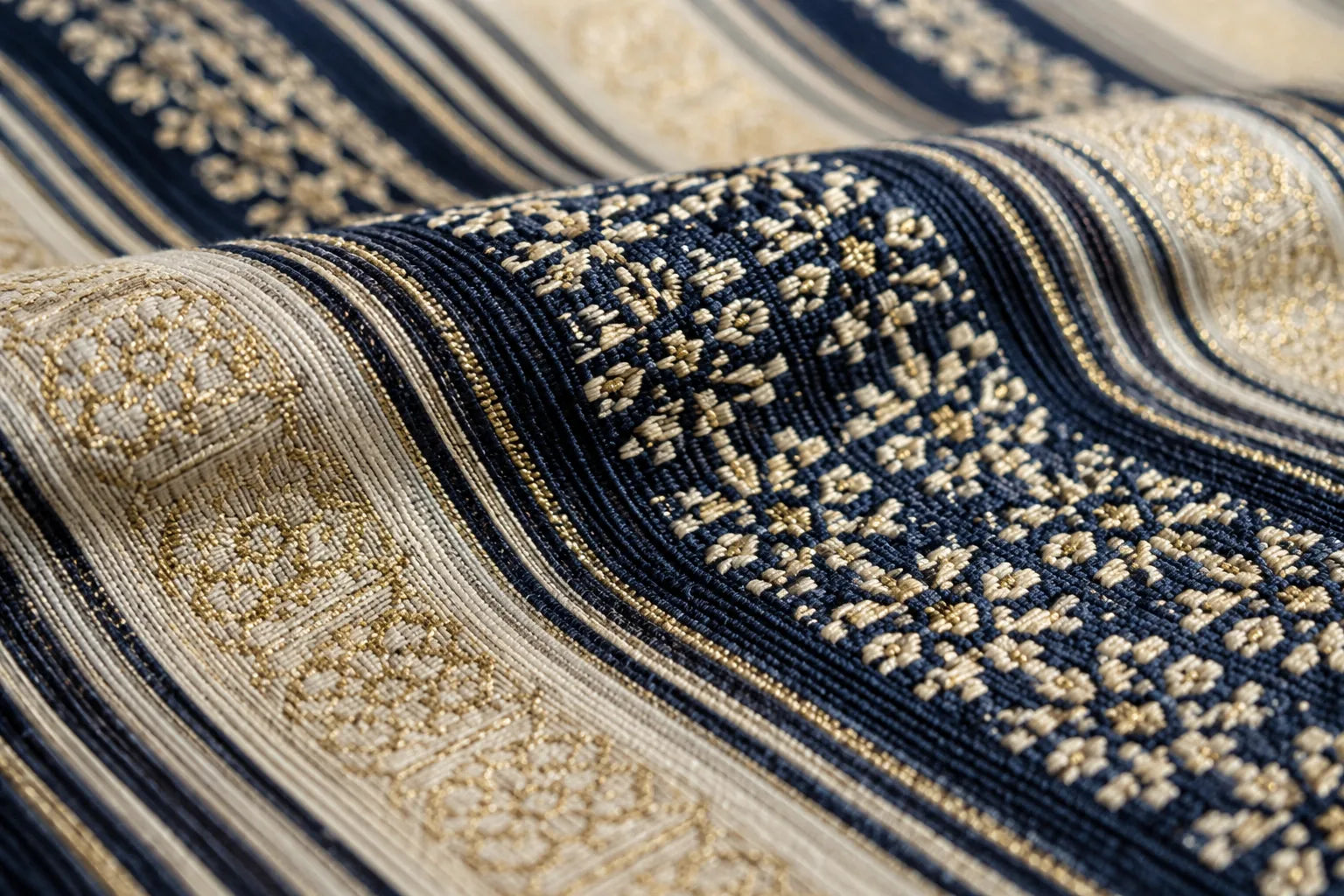
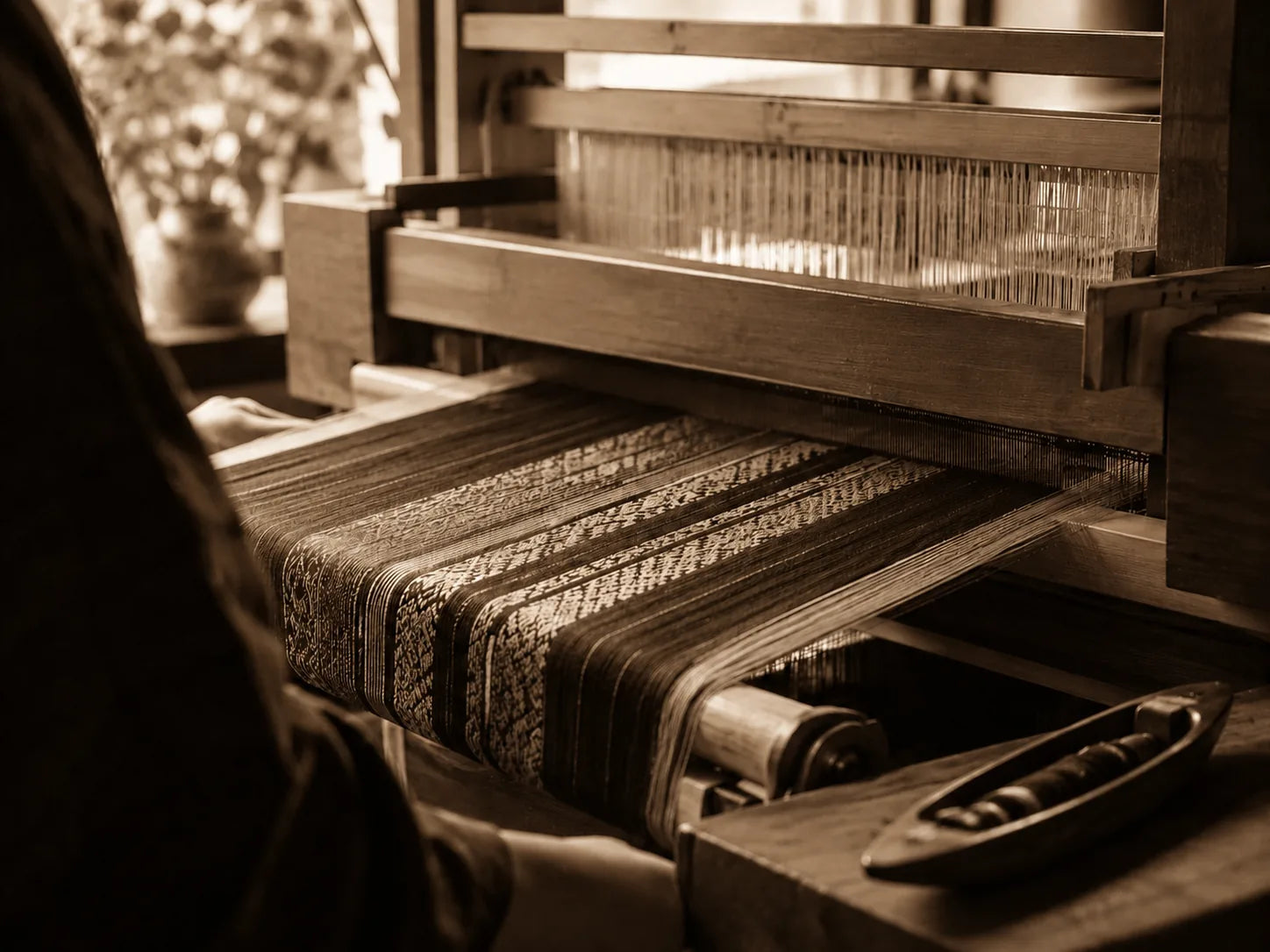
The pattern is part of the cloth.
Silk gives the piece lightness and touch. Hakata-ori gives it a visible woven surface, so the Fukuoka context can be explained in one sentence.
For the short craft primer, read What Is Hakata-ori?.
Check the practical details.
If the date matters.
Check stock, shipping timing, and whether the destination needs extra time.
If the recipient will use it often.
Pick the form first: stole, pouch, tie, or gift set.
If care should be simple.
Read the product care notes before choosing silk for daily use.
If you are choosing a limited piece.
Ask before promising a color, size, or deadline.
If the place matters as much as the material.
A Japanese silk gift can be chosen by form, but a Fukuoka gift also needs a simple way to explain where it comes from. Use the souvenir guide for travel context, compare stoles and formal ties by use, or use the wholesale inquiry page when the gift is for a group, boutique, or event.