The Craft
Hakata-ori begins at the loom, then becomes something close to daily life.
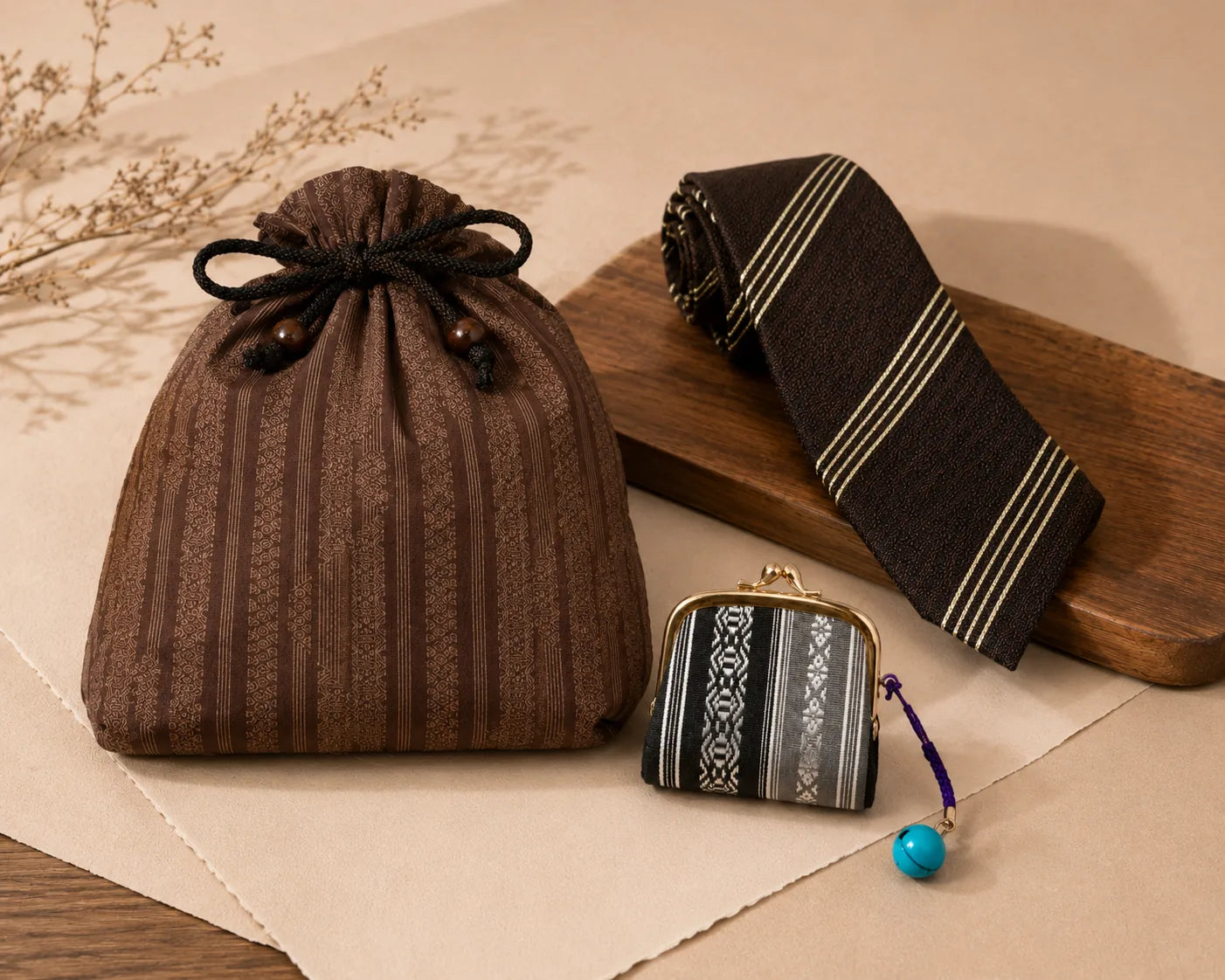
Hakata-ori is easier to appreciate when it is near the hand: a tie that settles into a suit, a pouch that sits in a bag, or a stole that folds lightly around the shoulders.
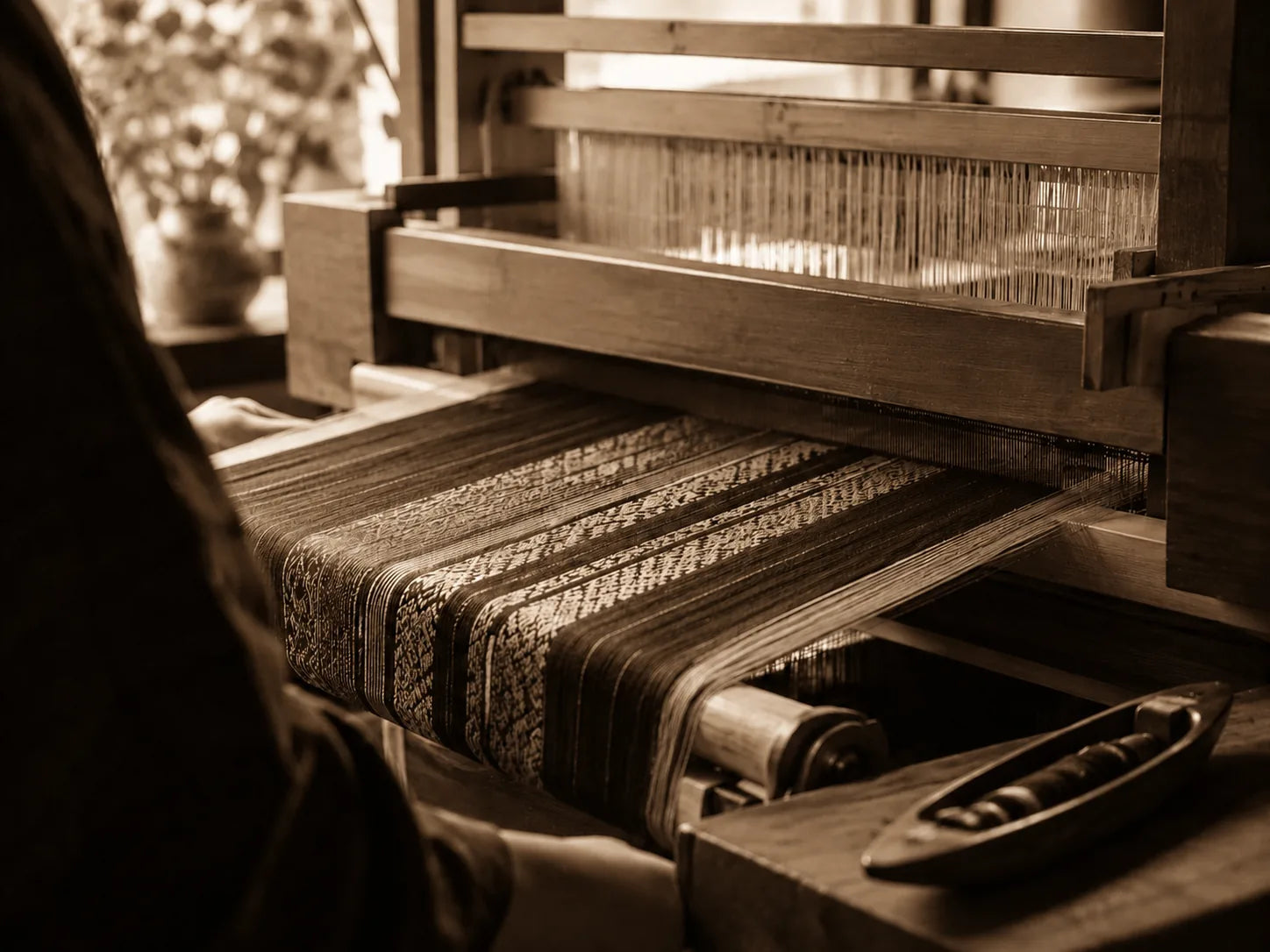
Thread, pressure, and time.
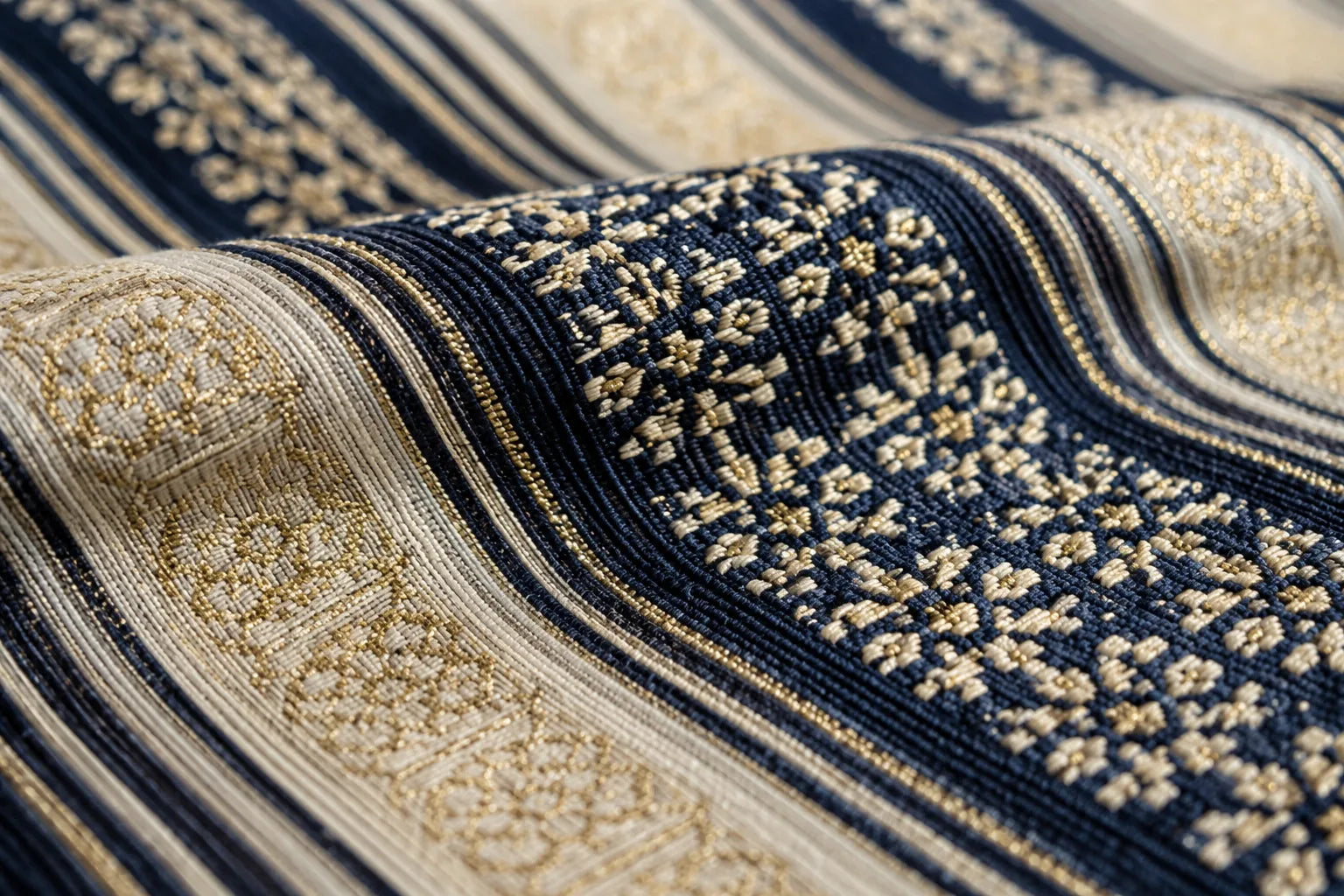
Fine ribs, raised figures, and a firm hand come from the density and tension of the threads. The pattern and texture are part of the woven structure.
That is why a small object can still feel substantial: thread density, tension, and woven relief give the cloth its presence.
Silk makes sense by touch.
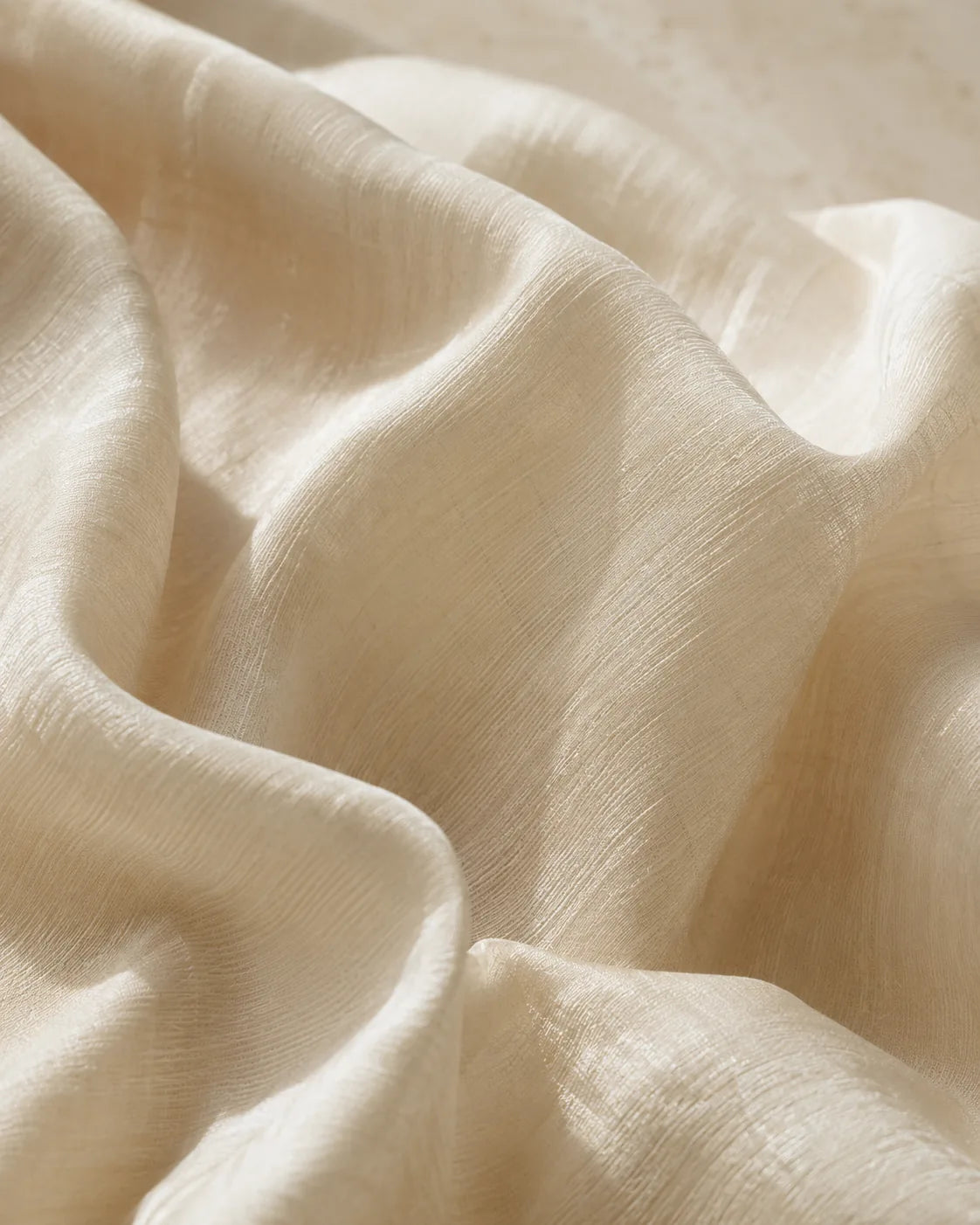
Light on the surface, a fine rib, and a soft fold make the difference visible before the piece is touched.
In a stole, that becomes lightness and drape. In a tie or pouch, it becomes a quiet texture that stays close.
The form comes first.
A tie makes the textile formal. A pouch or purse keeps it close. A stole makes the weave visible and soft.
The piece feels useful on the first day; the tradition can reveal itself over time.