
What does the Kenjo pattern mean in Hakata-ori?
Kenjo (献上) means tribute or formal presentation. In Hakata-ori (博多織), the Kenjo pattern brings together formal stripes, Buddhist ritual motifs, and a Fukuoka textile history tied to ceremonial offerings.
What Kenjo meaning includes
In Hakata-ori, the Kenjo pattern is traditionally explained through four elements: Oyako-jima (親子縞), Koko-jima (孝行縞), Dokko (独鈷), and Hanazara (華皿). Together they turn a formal woven pattern into a language of protection, respect, family feeling, and offering.
The notes below follow the explanation published by the Hakata-ori Industrial Association and keep the meaning simple.

A parent protects a child
Oyako-jima (親子縞) / parent-child stripes
Oyako-jima is a stripe arrangement where thick stripes are placed so they hold fine stripes between them. It is traditionally explained as a parent protecting a child.

A child cherishes a parent
Koko-jima (孝行縞) / filial stripes
Koko-jima is the reverse stripe relationship: fine stripes are placed so they hold a thick stripe between them. It is traditionally explained as a child cherishing or longing for a parent.

Clarity and protection
Dokko (独鈷) / ritual implement
Dokko is a Buddhist ritual implement and ceremonial object said to break through worldly distraction. As a gift, it can feel like a quiet wish for steadiness.

Offering and respect
Hanazara (華皿) / flower dish
Hanazara is a dish used to hold flowers scattered during Buddhist memorial offering. It gives the pattern a language of care, offering, and respect.
Why it is called Kenjo
Kenjo (献上) means presenting something to a superior. After Kuroda Nagamasa began governing Chikuzen in 1600, Hakata-ori was chosen as a tribute gift to the shogunate. The textiles presented each year included obi fabric, and the formal pattern used for those offerings became closely associated with that act of tribute.
The design was fixed around Dokko, Hanazara, and stripe elements. That background is why the pattern still carries a formal, ceremonial feeling today.
Short answers about Kenjo meaning
What does Kenjo mean?
Kenjo means tribute or formal presentation. In this Hakata-ori context, it refers to the tribute-pattern lineage associated with formal woven offerings.
What motifs are in the Hakata-ori Kenjo pattern?
The main named elements are Oyako-jima, Koko-jima, Dokko, and Hanazara. They are used to explain family care, protection, offering, and respect.
Why is the Kenjo pattern used for gifts?
The pattern gives a gift a simple story: Fukuoka textile craft, formal history, and motifs that can be explained as care, steadiness, and respect.
Choose by how formal the piece should feel
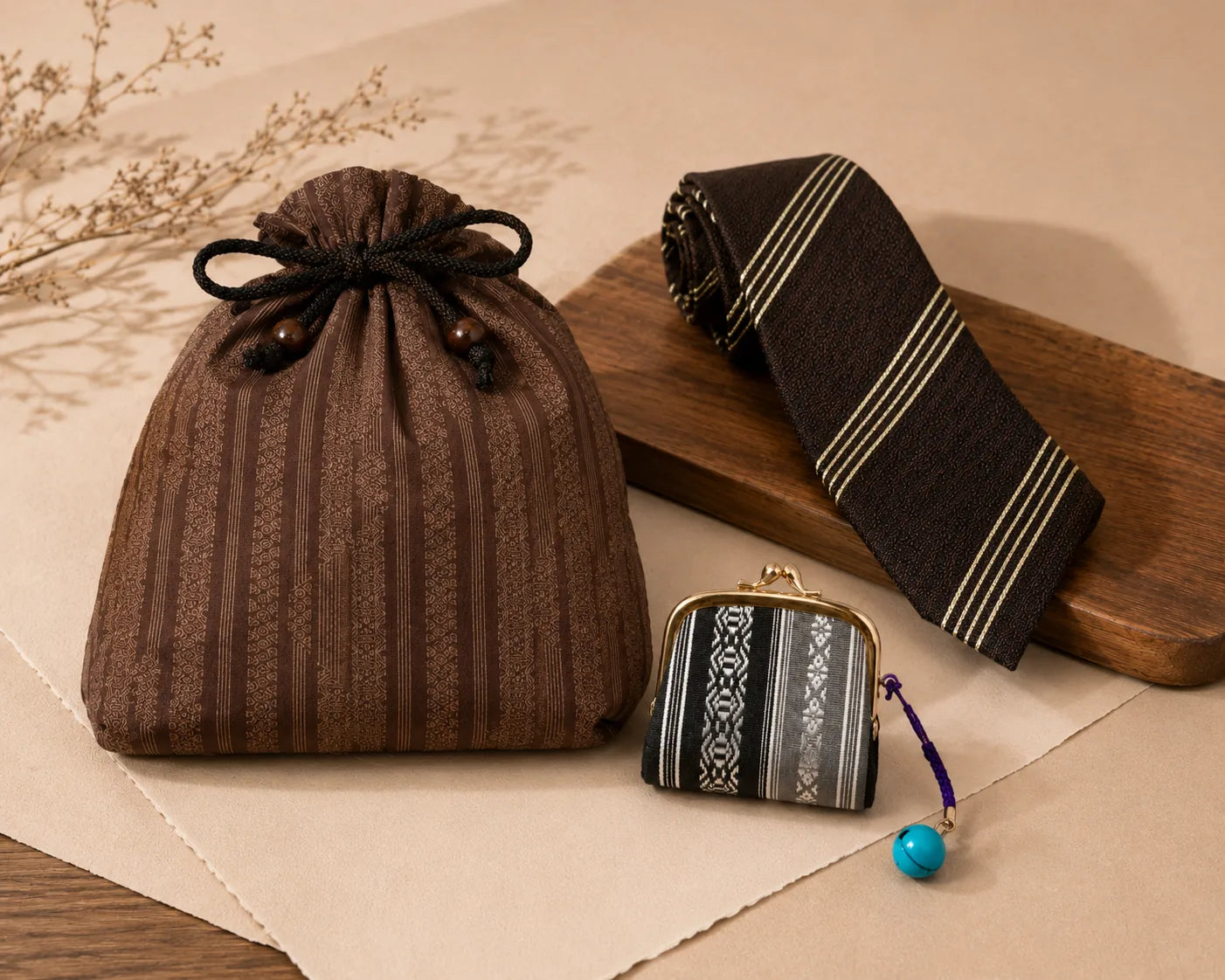
The same pattern can feel formal in a tie, quieter in a pouch, or easier to compare when you start from the way it will be used.

Ties, pouches, and gift sets
Start with products marked with the Kenjo pattern, from formal neckties to compact woven pouches and gift sets.

Daily use
Compact woven pieces for someone who will use a pouch, clasp purse, fan case, or small textile object.
Still comparing
Compare stoles, ties, pouches, clasp purses, and gift sets by the way they fit daily life.
Reference: Hakata-ori Industrial Association explanation of the Kenjo pattern.